
Dealing with MiFID data typically leads to questions around the three P’s; Process Trades, Package Trades and Portfolio Trades.
The latter two we will cover at a later date, for now we’re going to focus on process trades, so let’s start by clarifying what we mean:
‘A process trade is negotiated bilaterally via voice or instant chats and can be sizeable but benefits from being executed onvenue, meeting reporting obligations, and capturing the data in an audit trail’1.
There is currently no flag to capture process trades within the MiFID legislation, however under the new transparency regime, ESMA are introducing a ‘Negotiated Transaction’ flag2 which is defined as ‘Transactions which are negotiated privately but reported under the rules of a trading venue’.
The expectation is that this flag will be used to report process trades (for the avoidance of doubt, the FCA have not yet announced a similar flag).
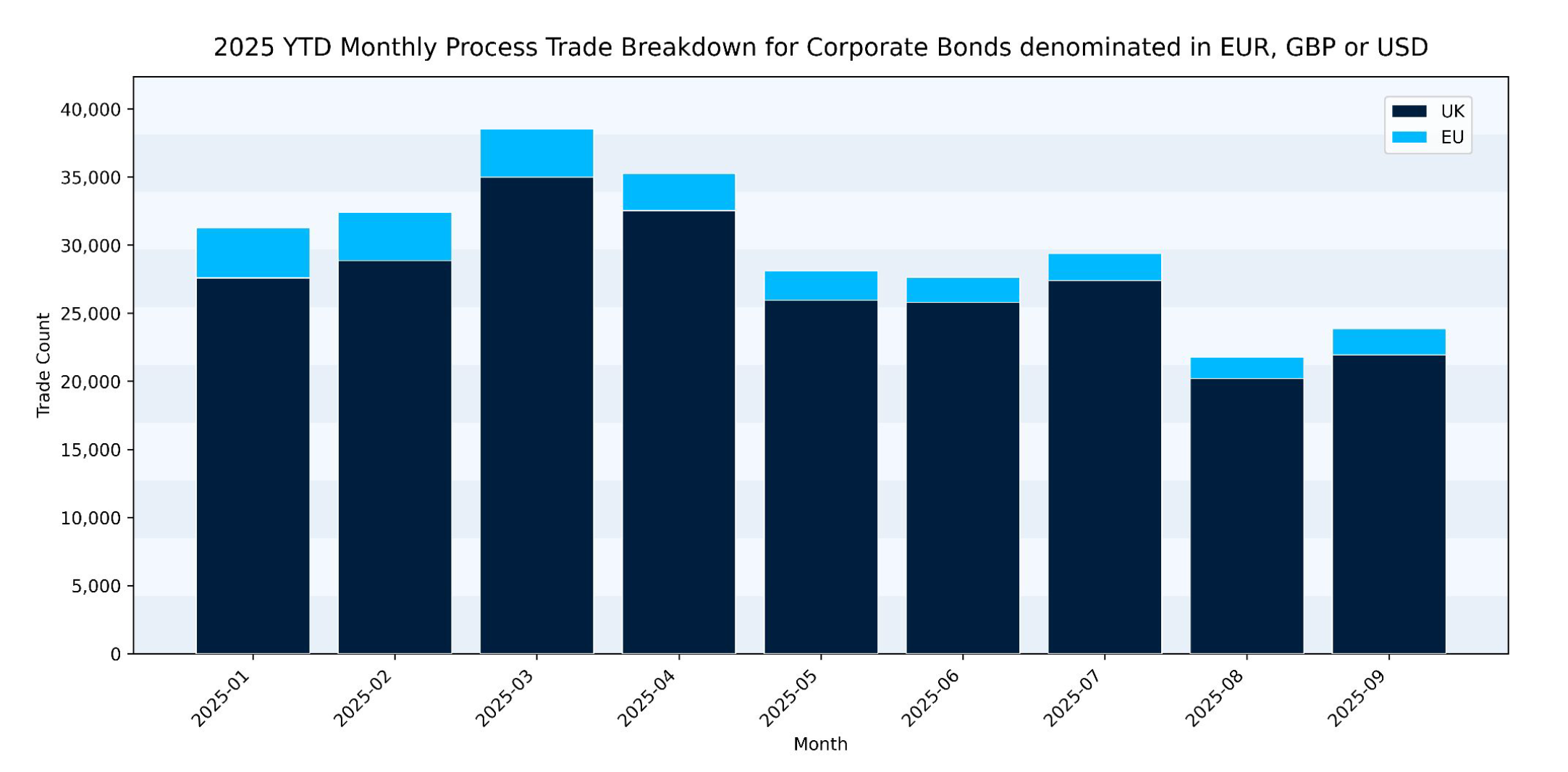
With the absence of a specific process trade flag, it can be difficult to identify these transactions, luckily Propellant Digital customers are able to identify these via a unique flag.
By filtering on this flag we can see the majority corporate bond process transactions are consistently reported via FCA venues (rather than ESMA).
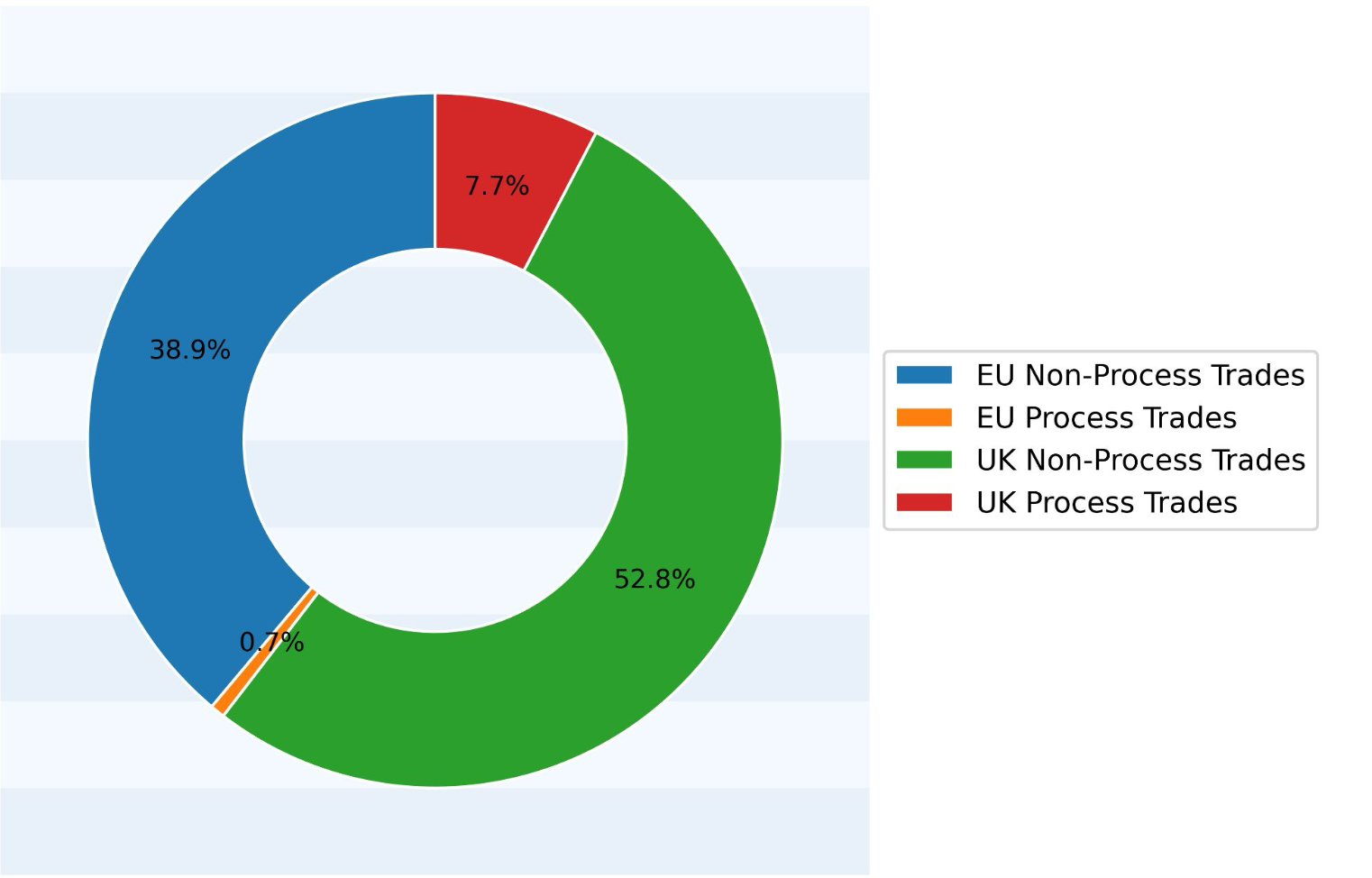
In comparison, volumes (of process trades) make up less than 10% of the overall market, again with the vast majority of activity being reported via FCA venues.
It should be noted that with the upcoming transparency changes (and the expectation of increased real-time reporting3), it should be possible to further improve the accuracy of process trade identification, however as the monthly chart shows, (process trade) frequency has been trending lower as electronfication increases, therefore it should not be assumed that volumes will increase.
We will of course be keeping a close eye on this and will do a follow up once the new ESMA regime comes into play next year.
1https://www.afme.eu/media/4arfmkp5/afmefixedincome202108.pdf
3https://www.ft.com/content/2a43670c-967d-44be-80cc-6671b0c90c00?shareType=nongift
%20(10).png)
%20(9).png)